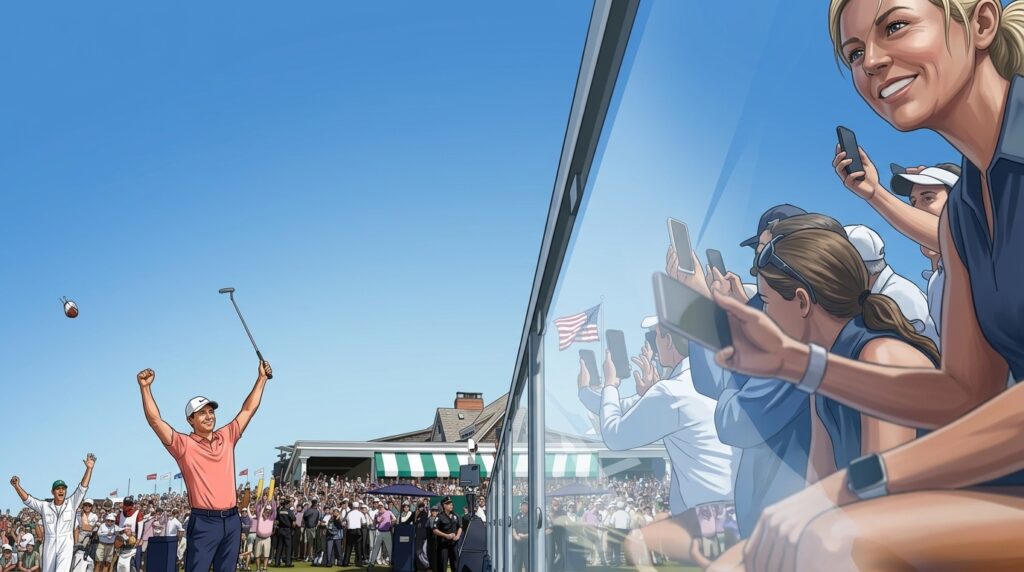
The U.S. Open at Shinnecock was marred by disruptive crowd behavior, forcing a mid-tournament apology from the USGA and igniting fierce debate. The incident, the second of its kind at a Long Island major in the last year, prompted deep reflection on the source of the hostility. One writer said: ” Nobody yelled in a backswing or cursed out a parent. In fact, for a few seconds on Sunday, I realized that I wasn’t really hearing the jeers because I have grown so accustomed to them. And then I thought for a few seconds more, and I realized that _I_ felt shame. Is the only time we can agree the house is on fire after it has already been scorched to the ground?
I came of age in the time of social media. I was in high school when I made my first accounts on Twitter and Facebook and Instagram. We didn’t know anything about _algorithms_ then, we were just posting into the abyss. Tech leaders made the idea of the “
Fans spent Sunday loudly rooting against the wire-to-wire winner and other players, including Rory McIlroy. The source of the discontent was compared to the toxic dynamics of social media’s early promise, which was described this way: ” sound exciting and civic-minded, and for a little while we proved them right. Then, after we were addicted, we realized we were condemned to spend the rest of time remembering why nobody likes attending town halls in the first place: The most obnoxious people tend to do the most speaking.
On Sunday at the U.S. Open, we saw what happens when our lives revolve around those “
This behavior was a live demonstration of online toxicity bleeding into the real world. The dynamic was summarized as follows: ” — and when those town halls have altered their rules to intentionally inflame every one of our sensibilities. The audience was not cheering but dunking. The yellers were not fans but commenters. The players inside the ropes were not people at all.”
The fallout has been immediate. Commentators and fans have questioned whether Long Island should be banned from the major championship rotation entirely. While the region has a rich golfing heritage, these repeated incidents are damaging the sport’s image. The USGA and other governing bodies now face the difficult task of managing fan experience without allowing it to devolve into outright hostility, a problem becoming more common across professional sports.