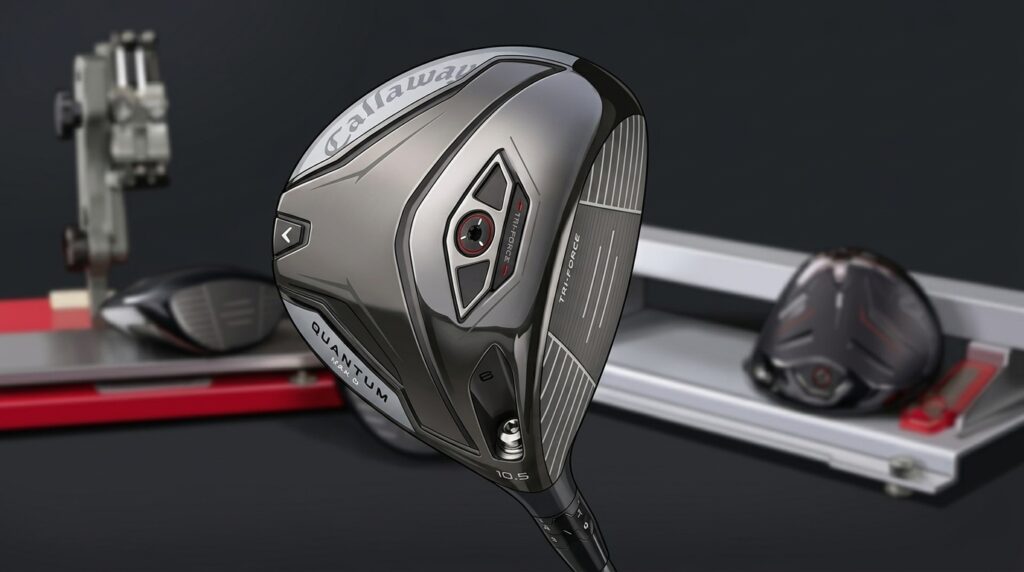
New equipment testing data challenges the long-held belief that golfers with slower swing speeds automatically benefit from draw-biased drivers. Test results indicate these clubs can decrease total distance for players swinging under 90 mph without offering a significant improvement in accuracy over neutral alternatives.
The primary purpose of a draw-biased driver is to help correct a slice and find more fairways. However, in a comprehensive test of 42 modern drivers, the three draw-biased models did not outperform top-rated neutral drivers in accuracy. One neutral driver found the fairway 88.5 percent of the time, far exceeding the top-performing draw-biased club at 78.3 percent. This trend continued when measuring the percentage of straight shots, where the draw-biased models ranked in the middle and lower tiers of the field. This data suggests that swing speed alone is not an effective indicator of a player’s typical shot shape.
For golfers who already struggle to generate distance, the yardage lost with these clubs is a significant factor. The three draw-biased drivers averaged 193.9 total yards, more than six yards shorter than the test’s top-performing driver. Furthermore, these clubs ranked poorly in smash factor, indicating less efficient energy transfer from club to ball. This trade-off—sacrificing distance without a clear gain in accuracy—makes the automatic recommendation of a draw-biased driver for this group questionable. The assumption often mischaracterizes players, as illustrated by one golfer’s fitting experience where a professional insisted, “this will prove you’re making contact all over the face, you just don’t feel it,” despite evidence of consistent strikes.
While a draw-biased driver remains a viable solution for any golfer who consistently slices the ball, the data shows it should not be a default prescription based on swing speed. A player’s actual ball flight and clubface control at impact are more critical variables. Golfers with slower swings who hit the ball straight or with a natural draw may achieve better overall performance with a neutral-biased driver optimized for their swing characteristics.