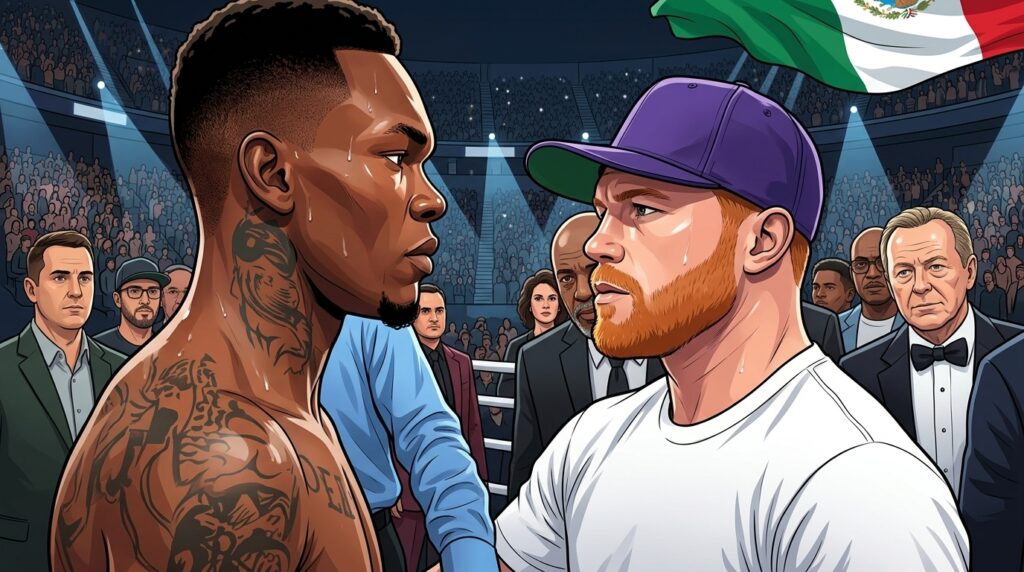
Canelo Alvarez maintains his status as boxing’s biggest attraction after securing world titles across four divisions. However, questions remain regarding his legacy due to a pattern of avoiding high-risk contenders during the peak years of their careers.
Alvarez remains convinced that his achievements place him among the sport’s greatest performers.
Speaking to CBS Mornings, Alvarez stated: “I pretty much accomplished everything. If you look back, every time I fight, I break records, and that’s my motivation. I’m fighting because I love boxing. I’m fighting to represent my country of Mexico,”
While the Mexican star points to ticket sales and division belts, critics highlight a persistent trend throughout his career. Favorable scorecards aided early victories, notably his disputed 2014 split decision over Erislandy Lara. Later at middleweight, Alvarez relinquished his WBC title in May 2016 rather than face Gennadiy Golovkin immediately. By the time the pair met in September 2017, Golovkin was 35 and showed clear signs of physical decline following grueling bouts with Kell Brook and Daniel Jacobs. Their initial draw, scored 118-110 by Adalaide Byrd in favor of Alvarez, generated widespread disapproval across the sport.
Other top contenders never received the chance to face him.
At middleweight, Demetrius Andrade and a prime Jermall Charlo were passed over. The pattern continued at super middleweight, where long-time mandatory challenger David Benavidez eventually moved up to light heavyweight without securing the fight. Instead, Alvarez selected opponents such as Jaime Munguia, Edgar Berlanga, and William Scull. While holding unbeaten records, none possessed victories over top-tier opposition. Technical threats like Cuban southpaw Osleys Iglesias, Lester Martinez, and Diego Pacheco were similarly ignored before Alvarez agreed to face Terence Crawford, a fighter stepping up two weight classes from super welterweight.
Alvarez holds titles in four weight classes alongside unmatched commercial drawing power. Yet, his strategic opponent selection ensures that debates over his true standing will persist long after his final ring appearance.