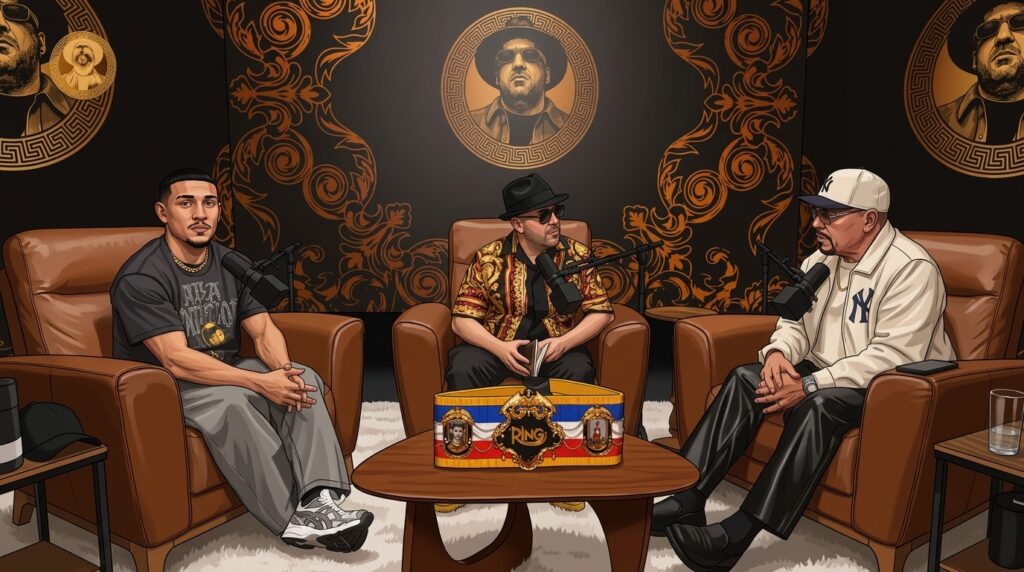
Teofimo Lopez has publicly blamed his father and trainer, Teofimo Sr., following his defeat to Shakur Stevenson. As Lopez prepares to move to 147 pounds against Rolando Romero on 22 August, doubts remain whether changing corners can fix his tactical limitations.
During an appearance on the Mr. Verzace podcast, the former champion confronted his father over the instructions given during the Stevenson bout. Lopez claimed he received poor guidance while his opponent controlled the contest. In response, Senior acknowledged the direction of the conversation, noting, “You’re blaming me for it.”
The exchange highlighted growing friction within the camp. Senior eventually accepted responsibility for the tactical outcome, saying, “It was my fault. You can blame it on me,” while maintaining that his son failed to execute basic defensive movements such as slipping the jab.
However, tactical options against Stevenson were inherently limited by Lopez’s fighting profile. While William Zepeda demonstrated that high-volume pressure, body attacks, and tight inside positioning can disrupt Stevenson, Lopez has never operated as a relentless pressure fighter. Throughout his career, he has relied on single power shots, timing, and resetting outside. Asking a fighter to alter a fifteen-year style over a single training camp was unrealistic.
Size and reach dynamics further complicated the matchup. Without a reach advantage to establish his jab from distance, Lopez was forced to rely on power shots to alter the momentum. Stevenson consistently avoided these isolated attacks and reset before follow-up combinations arrived.
The defeat underscores a broader trend since Lopez departed the lightweight division. His defining win against Vasiliy Lomachenko came against a naturally smaller, older opponent. Moving up to 140 pounds reduced those physical advantages, and stepping up to welterweight against Romero on 22 August will test his physical edge even further.
Furthermore, Lopez has consistently struggled when fights turn against him. Previous bouts against George Kambosos Jr. and Sandor Martin revealed how quickly his composure faltered under pressure. Against Stevenson, Lopez admitted the bout became a blur as frustration took over.
A change in the corner may provide brief optimism, but a new trainer cannot fundamentally alter Lopez’s physical profile or long-standing habits. Against top welterweights capable of taking him out of his comfort zone, the underlying limitations are likely to persist.