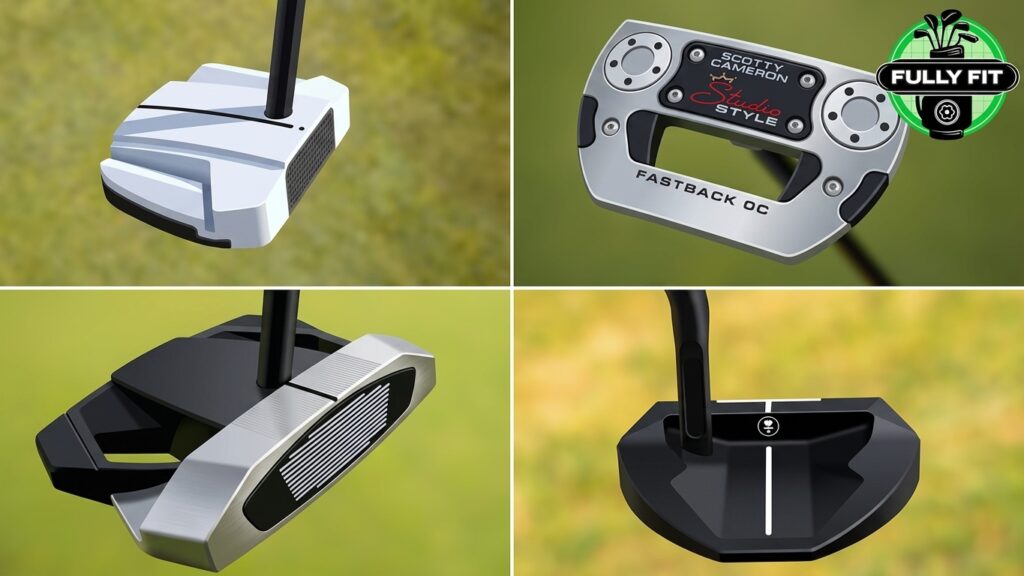
A six-month, in-depth test of popular low-torque putters confirmed their effectiveness in squaring the clubface but also revealed a significant shortcoming on the course. While the technology helps reduce face rotation, it can remove the sense of feel that many golfers rely on for breaking putts, ultimately proving less effective in real-world scoring.
Low-torque, or “zero-torque,” putters are engineered to minimize the natural twisting of the putter head during the stroke. A test report stated: ” moment came with the newer of TaylorMade’s Spider models, the Spider ZT, TaylorMade’s take on the low-torque, or “. The report also noted it’s a ” putting phenomenon that has captivated the marketplace over the past two years. Editor’s note: Given that even “. Regarding terminology, an editor’s note said: ” putters still have torque to get them to balance toe-up, GOLF refers to these types of putters as “. The design goal is to help the face return to square at impact, a concept that proved highly effective in a fitting environment where one model recorded a face angle of just 0.01° at impact.
Initially, the experiment was a success, eliminating a persistent left miss on short and mid-range putts. However, over several months, a new problem emerged on the greens. Golfers who have spent years feeling the toe of the putter release through impact found this sensation dulled. This led to a conflict on breaking putts, resulting in pushes to prevent a natural release or pulls when trying to force the clubface to close.
A similar experience was noted by Rickie Fowler after he experimented with low-torque models. A report on his transition stated: ” Fowler, who moved from a L.A.B. putter to a center-shafted Scotty Cameron GoLo this year, said. “. Fowler explained that heavier, stable putters served a purpose. “Going to the Jailbird, kind of that longer length, a lot heavier, helped kind of quiet and take the hands out of it a bit,” he said. His next phase was, “messing with the L.A.B.s, still helping take the hands out of it a bit, but at a lighter, kind of shorter setup to help try and bring some feel back into it.”
The experiment concluded with a switch to the Ping Scottsdale TEC Ally Blue Onset putter. This model is not a pure low-torque design; it has minimal toe hang, which provides stability while still allowing for a feeling of release. The test concluded that while low-torque putters can refine a stroke by quieting the hands, on-course validation is essential.