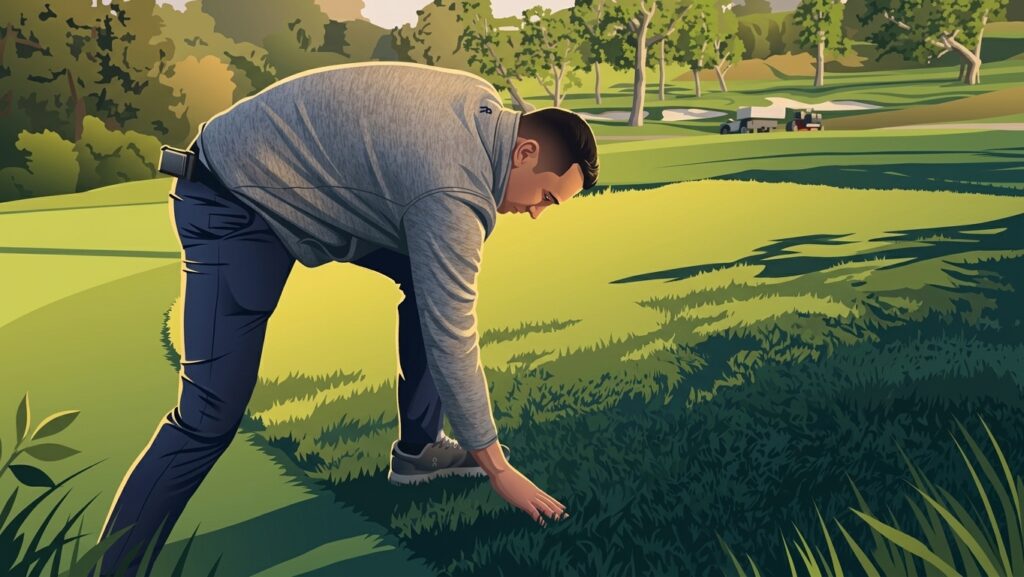
The world’s best female golfers are contending with more than just a major championship layout at this week’s U.S. Women’s Open; they are facing a unique agronomical challenge in the form of Kikuya grass at Riviera Country Club.
This particular turf, which populates the fairways and rough, is a defining characteristic of the historic Los Angeles course. Riviera’s location and philosophy are key to its prevalence. “Our property is down in the bottom of this canyon; it’s basically an old dry-wash riverbed,” said club superintendent Marshall Dick. He added, “Our general philosophy here is to nurture, enhance and perfect what wants to naturally grow within this canyon, because it’s a unique environment.”
According to assistant superintendent Tyler Shuman, the grass established itself over time. “Kikuya kind of came in naturally. It grows here … and the climate has kinda embraced it, and so have we. It’s definitely a different beast,” Shuman explained. While considered a “noxious weed” in many other parts of the country, at Riviera it is the primary turf.
The playing characteristics of Kikuya change significantly with the seasons. Its behavior during the summer months presents a different test than what PGA Tour players face at the Genesis Invitational in February. “Kikuya can be hardy, but it can be affected pretty easily too. Timing and the type of year will change things,” Shuman stated. “When we have the PGA Tour event in February, it kind of wants to shut down and go to sleep with the cooler temperatures. In the summer months, it becomes more of a spongy, hardy material.”
This spongy and thick consistency, especially in the rough, makes recovery shots incredibly demanding. The ball tends to sink down into the dense turf, making it difficult to achieve clean contact or advance the ball a significant distance. Players who miss the fairways will find their skills severely tested, as managing the Kikuya will be a critical factor for anyone hoping to lift the trophy at the first U.S. Women’s Open ever held at Riviera.