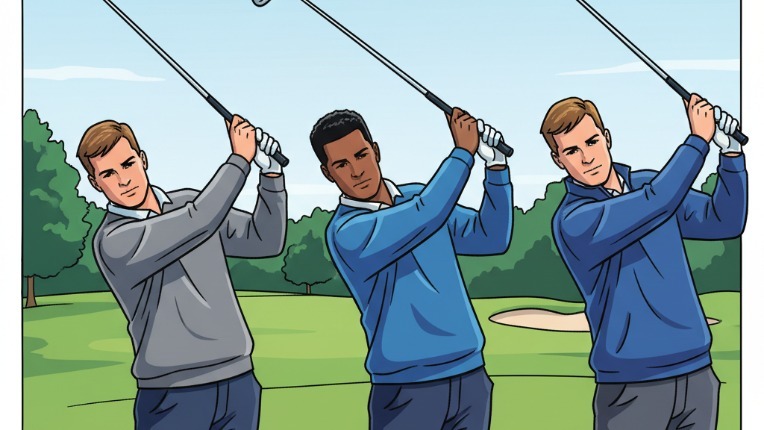
When it comes to golf, many players obsess over their grip, stance, and even the make of their clubs. But there’s one critical area that often goes overlooked: the wrists. The way your wrists engage during the swing has a massive impact on ball striking. Understanding this nuanced movement can elevate your game significantly.
Wrist action in golf is all about timing and precision. During the takeaway, your wrists should hinge naturally, allowing the club to move in sync with your body rotation. This sets up a clean transition into the backswing. If your wrists are too stiff or overly relaxed, it can lead to inconsistent swings. The club may go too far inside or outside the ideal path, affecting both distance and accuracy.
One common mistake players make is treating the wrists like mere hinges. They often forget that the wrists act as a connection between the arms and the club head. This means that how you position and move your wrists directly influences the club’s angle at impact. A proper wrist action helps ensure that you maintain the correct angle of the clubface throughout your swing, allowing for better control of the ball.
For instance, during the downswing, the wrists should unhinge but not too early. If they do, it can lead to a loss of power and a less-than-ideal strike. The wrists need to release at the right moment to maximize speed through the hitting zone. This release can mean the difference between a solid connection and a thin, mis-hit shot that veers off course.
Comprehending wrist dynamics can also improve your shot shaping. For those looking to draw or fade the ball, slight adjustments in wrist position during the swing can create the desired ball flight. A more closed clubface at impact, achieved through controlled wrist movement, promotes a draw. Conversely, an open clubface will help generate a fade. Understanding these adjustments opens up tactical options on the course.
Moreover, training the wrists doesn’t have to be extensive. Simple drills focusing on wrist movements can enhance your control. Practicing half swings while consciously hinging your wrists can help build muscle memory. In turn, this will cement proper mechanics into your full swings. The goal is to create a fluid movement that feels natural when under pressure during the heat of a round.
It’s clear that many players could benefit from focusing on their wrist action. Yet, the intricacies of the wrist swing are often disregarded in instructional content. Unfortunately, this neglect can negatively impact performance. For beginners, no one emphasized the importance of wrist action; it was always about the bigger picture. However, the deeper understanding of wrist mechanics gives players an edge.
As this season unfolds, perhaps take some time to analyze your wrist movements during practice. It could reveal tweaks necessary for more consistent ball striking. Keep in mind, it’s not just about the raw power but also the finesse that comes from understanding the correct mechanics. Improving your wrist movement will undoubtedly sharpen your overall game, leading to better scores and increased enjoyment on the course. This is the kind of edge every golfer yearns for, and it’s within reach for those willing to delve deeper into their swing mechanics.